Skip to content
Crypto Broker vs Exchange: What’s the Difference, and Which One Should You Use?
You’ve decided to buy some crypto, and now you’re looking at a list of platforms that all seem to do the same thing. A few call themselves exchanges. A few call themselves brokers. Some call themselves both. On the surface, they look interchangeable, but they aren’t.
The difference between a crypto broker and an exchange comes down to one thing: who you’re actually trading with, and how much of the work you do yourself. That single distinction decides what you pay, how much control you get, and how hard the whole thing is to learn. Pick the wrong one and you’ll either overpay for hand-holding you didn’t need, or land in an order book you weren’t ready for.
So here’s the honest version. What each model is, where each one costs you, and how the main brokers stack up once you look past the marketing.
What is a crypto broker?
A crypto broker is a company that sits between you and the market. You tell it what you want, it quotes you a single price, and it does the trade for you. You never touch an order book.
That’s the whole idea. Rather than matching you against another trader, the broker sources the crypto and sells it to you at a price it sets, usually with its fee already folded into that price. You pay a markup, and in return you get something simpler: a clean screen or an actual person, a fixed price, and often custody, reports, and support thrown in.
There are two kinds of broker, and the gap between them is bigger than it looks. App-based brokers, like the simple buy screen on Coinbase, automate everything. You tap buy, it quotes you, done, no human anywhere. Personal brokers, like Caleb & Brown or UpTrade, give you a real person who takes your instructions and handles the trade. The first kind is built for speed and small amounts. The second is built for larger balances, where having someone handle the trade earns its keep.
Brokers also tend to offer a shorter, curated list of coins rather than everything in existence, and they’re aimed squarely at people who’d rather not deal with the mechanics.
What is a crypto exchange?
A crypto exchange is a marketplace where buyers and sellers trade with each other directly, and the price comes from live supply and demand rather than from the platform. It’s the stock-market model applied to crypto: an order book, real-time prices, and you placing orders into it.
On an exchange, you get market orders, limit orders, charts, and usually a far wider menu of coins. Because you’re trading against other people instead of buying from the platform’s inventory, the fees are generally lower. Coinbase’s Advanced Trade screen, for instance, runs around 0.60% or less at the entry tier with no spread, while its simple buy screen bundles a spread plus a fee that can climb to several percent.
The trade-off is that you do the work. You choose the order type, you time it, you read the book. That control is exactly what experienced traders want, and exactly what can bury a first-timer. You also carry more of the responsibility for your own security, because the whole point is that you’re the one driving.
Broker vs exchange: the differences that actually matter
Here’s the honest comparison. And honest means naming where brokers cost you, not just where they help. Both models are legitimate. Which one is right depends entirely on what you’re trying to do.
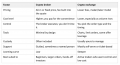
The place brokers cost you is real, so let’s say it plainly: you pay more. Uphold spells out the broker downsides without flinching. Higher fees than exchanges. Less control over when and how your trade executes. Fewer tools, like limit orders or leverage. A guide that leaves those out is selling you something.
Two things are worth adding, though.
First, the line between the two is blurring. Plenty of platforms now run both models. Coinbase is the obvious case, with a simple broker-style buy screen and a full exchange living in the same app. So “broker vs exchange” is often really a question of which mode you use, not which company you sign up with.
Second, the usual knock that brokers have thin liquidity only holds for app-style brokers pulling from a limited pool. A personal broker running an OTC desk with several liquidity providers behind it is a different matter, which brings us to the next part.
What about OTC desks?
OTC stands for over-the-counter, and it’s how big crypto trades actually get done. Once your order gets large enough, dropping it into a public order book works against you. The price moves as you buy, and you end up paying more than the screen first showed. That effect is called slippage, and on a large order, it’s a real cost, not a rounding error.
An OTC desk gets around it. Instead of putting your order into the open market, a broker with OTC access quotes you one firm price for the whole trade, then fills it off-book across its network of providers. You know your exact price before you commit, and your order doesn’t push the market against you.
OTC usually kicks in somewhere around $50,000 a trade, depending on the desk, though some set the bar higher. This is also where the “brokers have thin liquidity” line falls apart. A desk sourcing from many providers at once can often fill a large order at a better effective price than a single order book, because it isn’t stuck with whatever depth that one book happens to have at that moment.
Buying a few hundred dollars of Bitcoin? OTC has nothing to do with you. Moving five or six figures in one trade? It’s often the difference between a clean fill and a visibly worse one.
So which should you use?
Start with three questions. How much are you trading, how hands-on do you want to be, and do you want custody handled for you?
Most people buying their first $500 of Bitcoin don’t need a broker. An exchange’s simple buy button, or Coinbase’s basic screen, gets it done, and the convenience premium on a small trade is only a few dollars. Once you find your feet, switching to an exchange’s advanced interface cuts your fees in a way you’ll actually notice.
A broker starts to make sense when one of these is true: you’re trading amounts large enough that a firm OTC price beats slippage, you genuinely don’t want to learn order books, or you want a real person accountable for your trades and one number to call when something goes sideways. For a lot of people putting serious money into crypto for the first time, that’s worth the markup. For active traders chasing the lowest possible cost, it isn’t.
There’s no answer that’s right for everyone. There’s only the one that fits your size, your patience for doing it yourself, and how much you value having someone else handle the parts you’d rather skip.
Comparing the main crypto brokers
Instead of forcing one flat ranking that pits a global platform against a boutique firm, it’s more useful to split brokers by model. App-based brokers are self-serve and built for convenience. Personal brokers put a named human on your trades and go after larger balances. They solve different problems, so I’ve grouped them that way.
Fees, minimums, and asset counts change often, so check the current numbers on each platform’s own site before you act. Everything below was verified against each company’s own documentation at the time of writing.
Group A: app-based brokers
Coinbase
The largest US crypto platform, and for most people the default first stop. Its simple buy screen behaves like a broker: tap, get a quote, done. That convenience is priced into a spread of roughly 0.5% plus a fee that can reach several percent on card purchases.
The same app’s Advanced Trade screen works as a full exchange at a fraction of the cost, around 0.60% or less at the base tier. Coinbase is a publicly listed company with strong regulatory standing, and it handles custody for you. If you’re new, this is a reasonable place to start, and the cheaper advanced screen is right there when you’re ready for it.
eToro
A multi-asset broker where crypto sits next to stocks and ETFs in one account. It charges a flat 1% commission on crypto buys and sells, shown separately from the spread since 2025. It’s regulated in several places, including by the FCA, CySEC, and ASIC.
The pull here is having crypto alongside your other investments, plus the social and copy-trading features. Good fit if you want one app for your whole portfolio rather than a crypto-only tool.
Bitpanda
A European broker known for solid educational content and a beginner-friendly interface. Pricing is baked into the quoted price as a premium, commonly around 0.99% for crypto but wider when markets get choppy, and Bitpanda doesn’t publish its spreads up front.
It covers crypto alongside stocks, ETFs, and precious metals. Not available in the US. Best for European retail investors who want a clean, guided experience across a few asset types.
Uphold
A multi-asset broker spanning crypto, fiat, precious metals, and US equities, with real-time proof-of-reserves reporting that a lot of competitors don’t match. Fees are spread-based and on the higher side, roughly 1.4% to 2.95%.
There’s no order book and no advanced charting, so active traders will feel boxed in fast. Worth a look if transparent reserves and easy cross-asset swaps matter more to you than low fees.
Group B: personal brokers
By the time you get here, you’ve seen the pattern. App brokers give you speed and no human, and charge you for the convenience. Personal brokers answer a different question: what you use when you want an actual person handling execution on a larger balance.
Caleb & Brown
Founded in Melbourne in 2016, Caleb & Brown provides its clients with a personal broker for buying, selling, and swapping hundreds of assets, a flat fee of 3.5%, and no joining or account fees. Its online portal allows trades from $500, with a $2,000 minimum on broker-assisted trades. In July 2025, it was acquired by the Australian exchange Swyftx, so it now sits inside a larger group rather than running fully on its own.
UpTrade
Also founded in Melbourne, Uptrade is a crypto broker with one defining trait: it runs no retail exchange at all. Brokerage is the entire business, not a feature bolted onto a bigger platform, which structurally sets it apart from everything in Group A. It was founded in 2023 by a qualified stockbroker who’d previously built the brokerage desk at a major crypto broker, and it gives each client a dedicated 1:1 broker with 24/7 support across time zones.
Clients get access to 500+ digital assets, institutional custody through Fireblocks using multi-party computation and cold storage, same-day OTC settlement, and execution routed across more than 40 liquidity providers. It’s registered with AUSTRAC as a digital currency exchange provider (DCE100856266-001) and holds a Trustpilot rating of 4.9 out of 5. The account minimum is $10,000.
It fits individuals and companies trading five or six figures who want a named person handling execution rather than a self-serve portal, and who like the idea of a firm that does nothing but brokerage. The limitations, since every entry gets one: it’s younger than the platforms above it, smaller in scale, and like any broker it costs more than doing the trades yourself on an exchange.
The bottom line
If you’re buying small and want to learn, use an exchange, and move up to its advanced screen to trim your fees. If you’re moving larger amounts, don’t want to babysit an order book, or want a real person on the hook for your trades, a broker earns its markup. Work out your size and your appetite for doing it yourself first. The platform follows from that, not the other way around.
Frequently asked questions
What is the difference between a crypto broker and a crypto exchange?
A crypto broker is a middleman. It quotes you a price and executes the trade for you, with its fee usually built into that price. A crypto exchange is a marketplace where you trade directly against other users at live market prices. Brokers are simpler but cost more. Exchanges are cheaper but ask more of you.
Is Coinbase an exchange or a broker?
Both. Coinbase’s simple buy-and-sell screen works like a broker, quoting you a price with a spread and a fee. Its Advanced Trade screen, inside the same app, is a full exchange with an order book and much lower fees. Which one you use decides what you pay.
Is Robinhood an exchange or a broker?
Robinhood works as a broker for crypto. You buy and sell at the prices Robinhood gives you rather than trading on a public order book, and for a long time, you couldn’t move crypto off the platform to your own wallet. It’s built for simplicity, not for the control an exchange offers.
What are the risks of using a crypto broker?
Mostly higher costs and less control. You usually pay more than on an exchange, you don’t control the exact moment of execution, and you get fewer tools. With any custodial broker, you’re also trusting the firm to hold your assets, so its security and regulatory standing matter a lot.
Is a crypto broker safe?
It can be, but that depends on the specific broker, not the model. Look for clear regulatory registration, institutional-grade custody, client assets kept separate, and honesty about how funds are held. A regulated broker with strong custody can be very safe. An unregulated one is a real risk, no matter how polished the website looks.
Do brokers charge more than exchanges?
Usually, yes. Brokers fold convenience, custody, and support into their pricing, so you pay a premium over an exchange’s raw trading fees. The gap is tiny on small trades and larger for active trading. On a big single order, though, a broker’s OTC desk can sometimes come out ahead by cutting slippage.