Skip to content

Warren Buffett’s 90/10 Portfolio: What He Said and How to Build It
By Stig Brodersen • Published: • 6 min read
Almost 20 years ago, I first learned about Warren Buffett. My finance professor told us that he was the luckiest coin-flipper in the world, and that financial markets were efficient. Back then, as now, it’s hard not to be fascinated by the greatest investor of all time.
Inspired by Buffett, I’ve written four value investing books, including a bestselling book about how he reads financial statements, and through more than 200M downloads, I have interviewed hundreds of investors about beating the market. Today, it’s easy for me to say that my professor was wrong. A few investors can beat the market, and the very best is Buffett.
It may therefore seem odd that I’m writing this post encouraging you to invest in index funds rather than trying to beat the market. As with so many things in my life, I cloned the idea from Buffett. Yes, when Buffett explained what should happen to his wife’s money after he is gone, he did not mention stock picking. He did not even mention Berkshire Hathaway. He named one index fund and some government bonds. That was the whole plan.
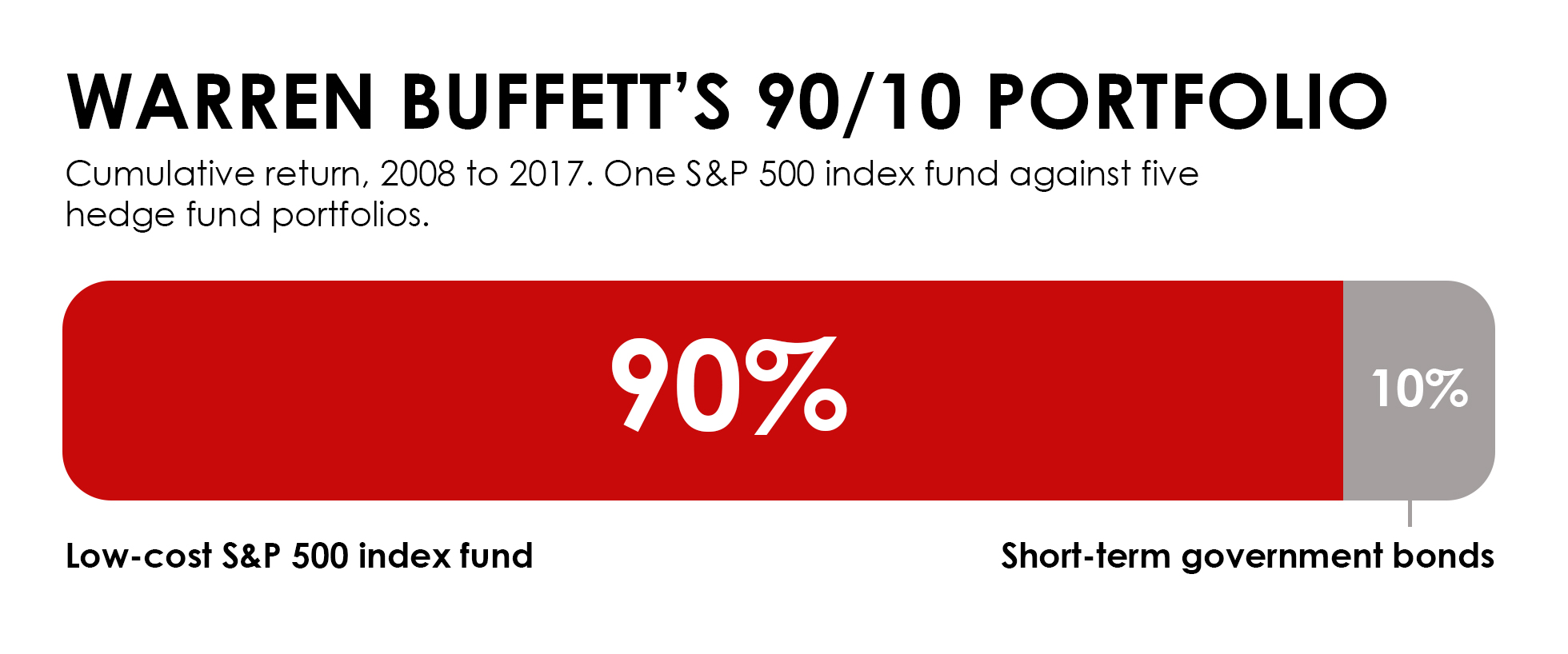
In his 2013 letter to Berkshire shareholders, Buffett said: “My advice to the trustee could not be more simple.” Put 10% of the cash in short-term government bonds. Put 90% in a very low-cost S&P 500 index fund.”
The advice is for his wife and for the vast majority of people. Different game. Different rules. Costs never sleep. Before costs, the average active investor earns the market return. After costs, less. You cannot argue with simple math, yet the world isn’t that simple. If you ask people whether they are above-average drivers, more than 90% say they are. So if you’re reading this, chances are you think you are both an above-average driver and an investor!
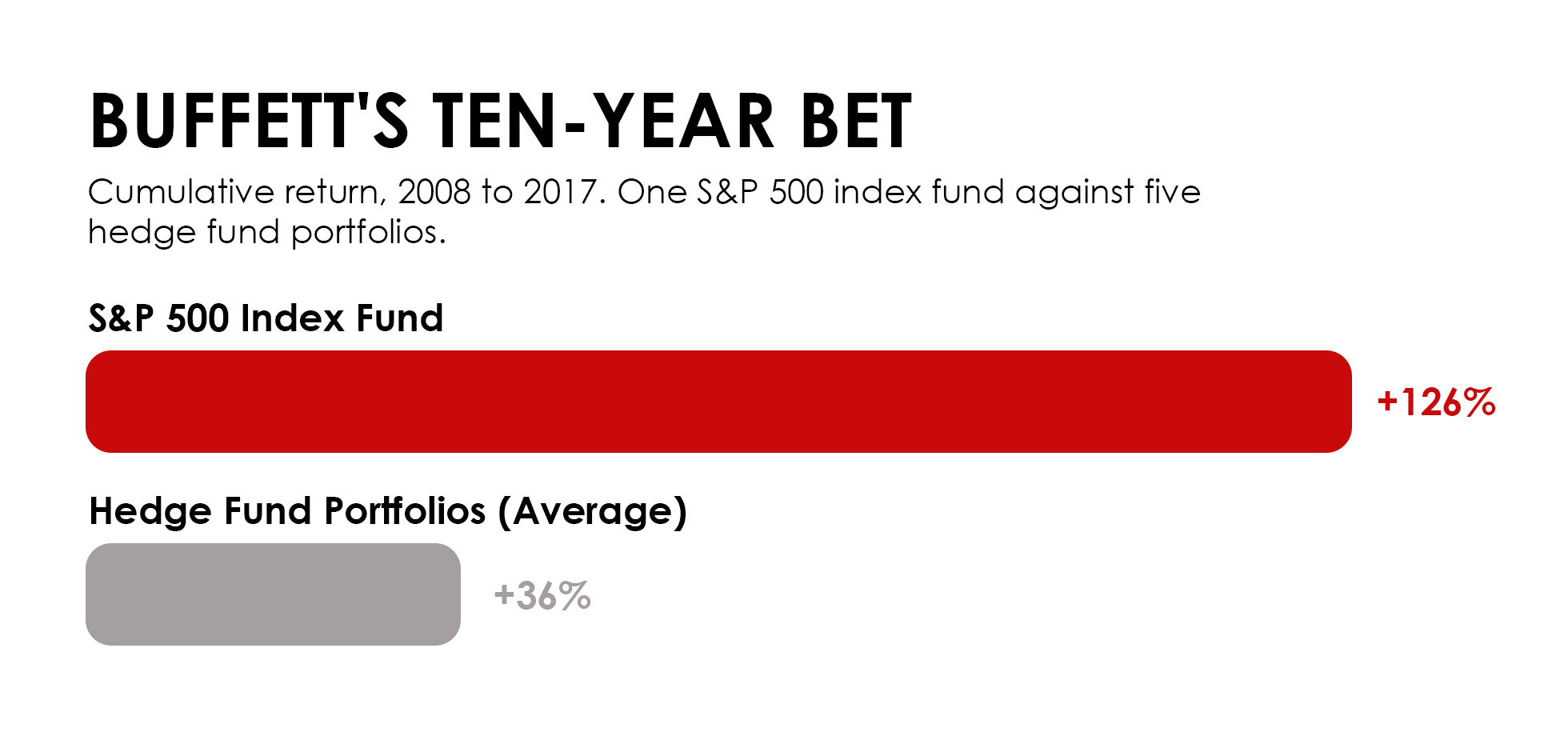
It may surprise you to learn that over 20 years, 93%(!) of actively managed U.S. large-cap funds underperform the S&P 500 according to S&P’s SPIVA scorecard. Buffett knew this and decided to put his money where his mouth was, betting a million dollars that an S&P 500 index fund would beat a handpicked group of hedge fund portfolios over 10 years. What happened? The index fund gained roughly 126%. The hedge funds averaged about 36%. I spoke with Ted Seides, the man behind the bet, in this interview.
To some investors, it may seem very aggressive to have 90% in equities. So why does Buffett endorse the strategy? First and foremost, the 10% allocation to short-term government bonds is not there to give his wife the best returns. It is there so she never has to sell stocks in a crash, and it pays the bills while the market recovers.
How to Build the 90/10 Portfolio?
90% in an S&P 500 index fund, for example, VOO, IVV, or SPY. Everything else equal, you should pick the ETF with the lowest fees. Buffett suggested Vanguard as a good starting point; in this case, VOO.
10% in short-term government bonds. You can buy ETFs with the tickers: SGOV, VGSH, BIL. As with the equities, you want to buy the ETF with the lowest costs.
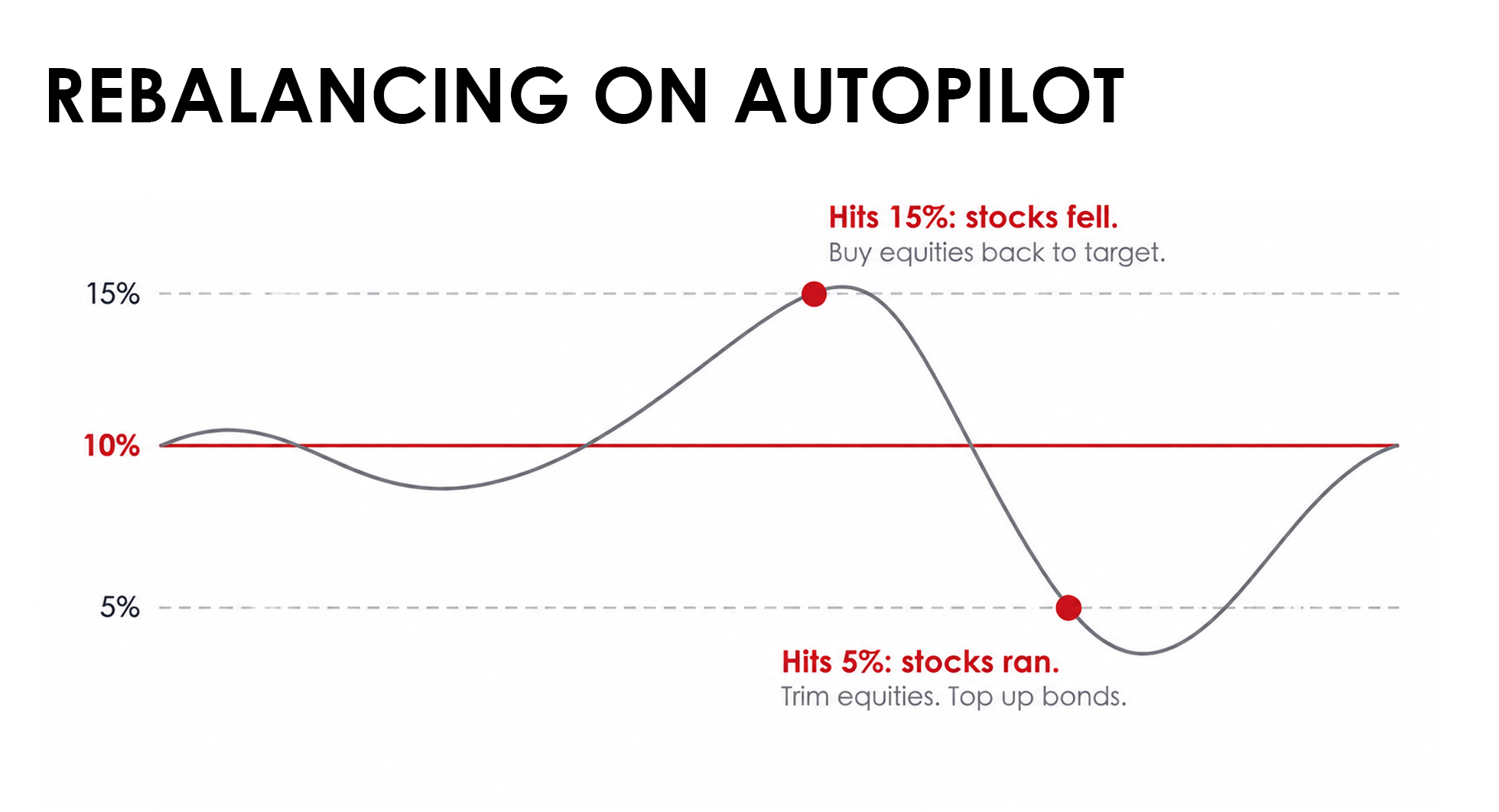
The core idea is this: own thousands of productive businesses, incur almost no costs, and rebalance twice a year on two fixed dates. If fixed income drifts to 5% because stocks ran, trim equities and top it back to 10%. If it drifts to 15% because stocks fell, buy equities. The beauty is that you sell high and buy low on a schedule, so no forecast is required.
Warren Buffett’s 90/10 Portfolio for Canadians
Buffett wrote his instructions for an American trustee. Canadians can run the same philosophy using the free memo titled “A Simple Framework for Building Long-Term Wealth” by David Fagan. David is a CPA based in Nova Scotia and has spent two decades examining client portfolios.
I strongly encourage you to watch his short lesson explaining why 98% of us should stop playing the professionals’ game. It also includes a sleep test I wish someone had given me twenty years ago.
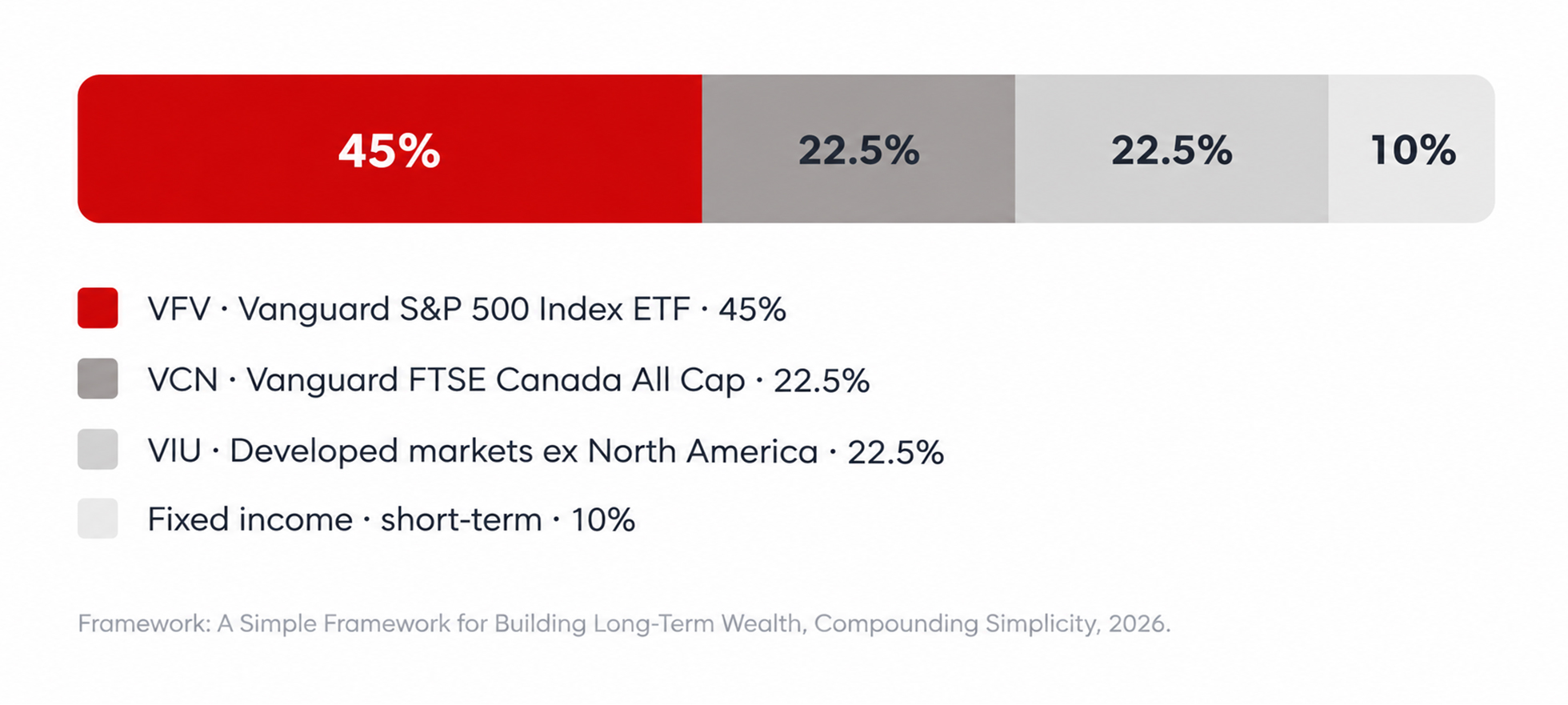
The portfolio is 90/10 but specific to Canadians. 10% is allocated to fixed income for stability and liquidity. 90% is allocated to equities across three Vanguard ETFs. First 45% in VFV for the S&P 500. Then 22.5% in VCN for the broad Canadian market, and 22.5% in VIU for developed markets outside North America. That gives you roughly 4,400 stocks that you pay only a tenth of a percentage point annually to have managed.
The sharpest idea in the memo is total wealth performance. Your statement might say 11%. Idle cash and emotional decisions can cost 1.5% before the money is even invested. Taxes can take another 2% after, so what compounds is only what remains.
The free memo also covers the behavioral traps. As you read it, you will see that the real risk is not the market but protecting yourself against…well, yourself. Here is a great resource for learning more about controlling your investing behavior.
Warren Buffett 90/10 Portfolio FAQ
Get smarter about valuing businesses in just a few minutes each week.
Get the weekly email that makes understanding intrinsic value
easy and enjoyable, for free.
Disclosure
Stig Brodersen is co-founder of The Investor’s Podcast Network and Compounding Simplicity. This article and the linked memo are educational. Nothing here is investment, tax, or legal advice, and nothing is a recommendation to buy or sell any security.
The Investor’s Podcast Network publishes educational content only. Nothing on this page is investment advice. Past performance does not guarantee future results. Do your own research and consult a qualified professional about your situation.
OUR COURSES