Skip to content
Hermès (RMS) Intrinsic Value: Stock Valuation
By: Daniel Mahncke
Retail companies are a tough place for investors. Brands come and go, and what looked like a phenomenal business two years ago might be a dumpster fire today.
You can say something similar about automotive brands. There’s less churn among the top names, sure—but the cyclicality still makes the sector pretty unattractive.
We would know. We’ve looked at automotive companies before, and we’ve looked at plenty of retail names. But in both sectors, there’s a subcategory that stands out: luxury companies.
Ferrari isn’t like other car companies. One look at the financials and you have no doubt about that. And LVMH isn’t your typical retailer. Yet there’s one luxury fashion house that stands above all others: Hermès.
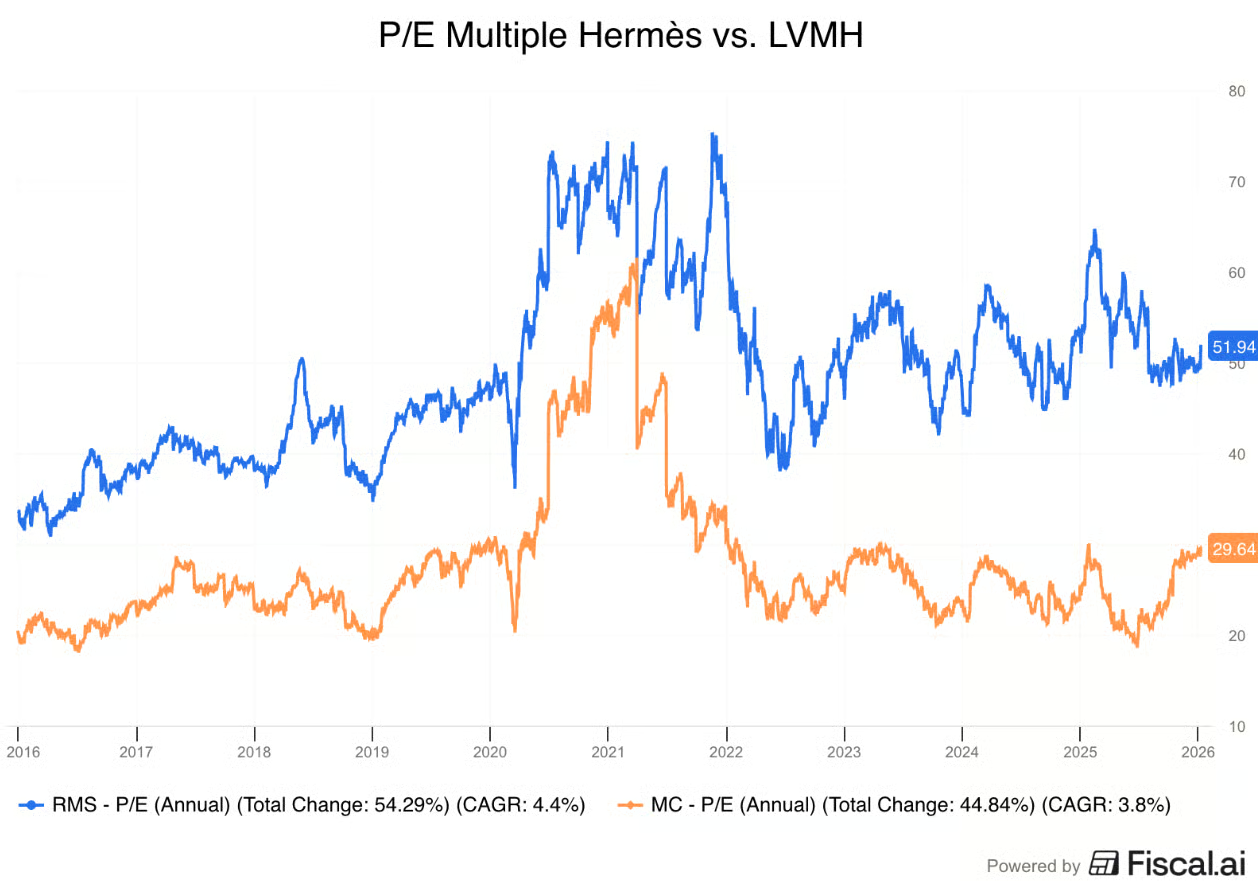
Yes, Hermès trades at a premium. But historically, that premium hasn’t stopped shareholders from outperforming the market. Over the last decade, Hermès traded at an average P/E of roughly 48x and still delivered annualized returns north of 20%.
The goal of today’s article is to figure out whether the next decade can look anything like the last one.
Let’s dive in!
OVERVIEW OF HERMÈS: THE BEST BRAND IN THE WORLD
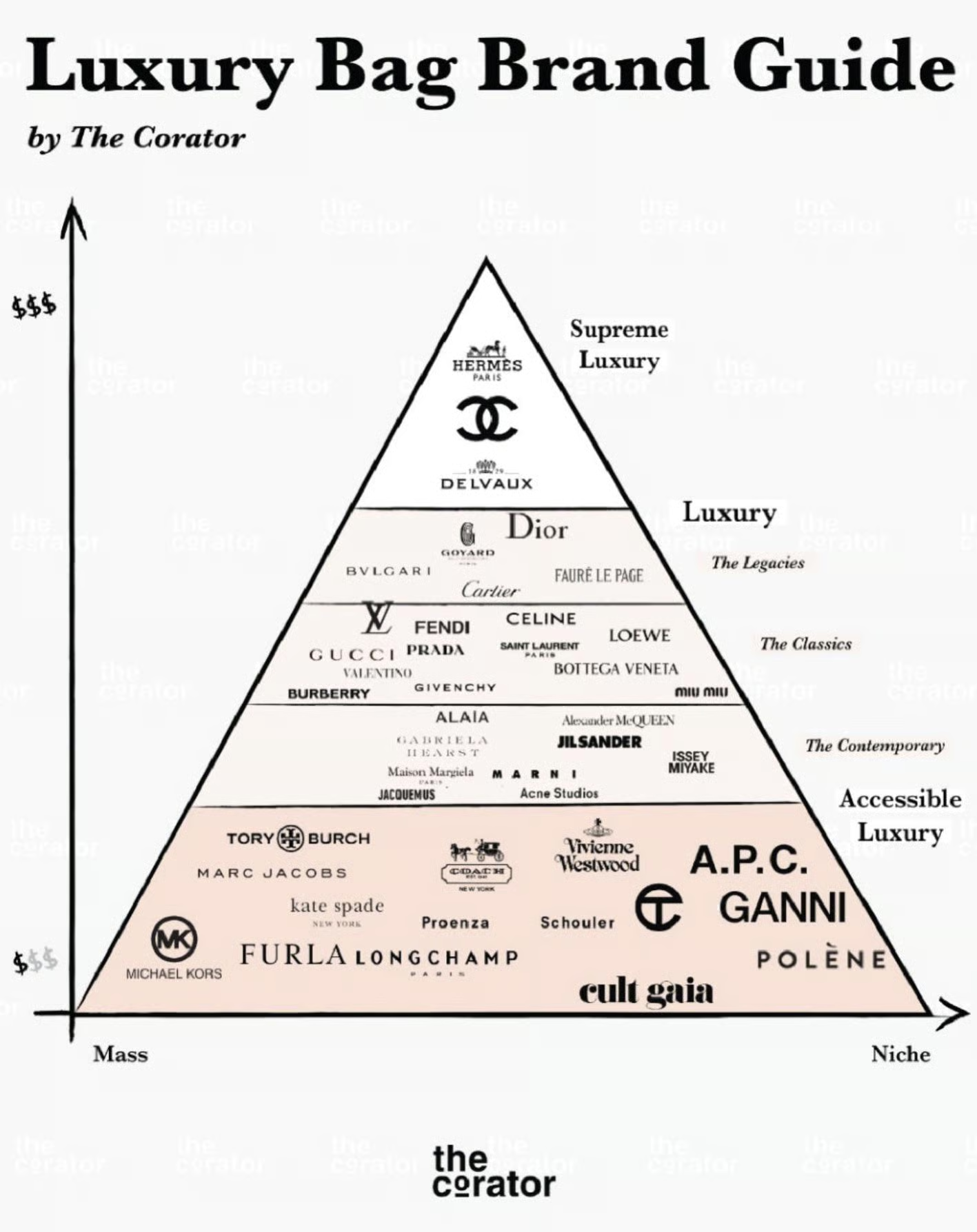
There are three perspectives you can take to show just how different Hermès is from other luxury brands. In luxury investing circles, there’s a hierarchy usually portrayed by a pyramid.
No matter which one you look at, Hermès will be on top of that pyramid on all of them. It’s the ultimate level of luxury. One that, to some extent, can’t even be bought with money. At least, there’s no guarantee.
But we don’t even have to rely on fashion experts and their opinions. As finance guys, we trust the market. Okay, that sounds a bit cliché. But honestly, there are way more fashion-versed people than Shawn and me. And still, if you look at the market and the consumer, you can’t miss that Hermès is viewed differently.
Just compare Hermès’ stock chart with other luxury names like LVMH, Kering, or Burberry. You’ll see that all of them are meaningfully more volatile than Hermès. Luxury brands love to market themselves as “anti-cyclical,” but only a few can actually deliver on that promise. And Hermès is one of the few.
An even easier way is to look at the multiples the market is willing to pay for a dollar of earnings. If you compare LVMH to Hermès, you can clearly see that the market consistently gives Hermès a hefty premium.
Last but not least, ask yourself how many LVMH bags you see when you walk outside and compare that to how many Hermès bags you spot. Sure, Hermès is harder to clock because it doesn’t rely on such a noticeable signature print. But I’d bet a good chunk of my portfolio that you see at least ten times more LVMH bags when you walk through your city.
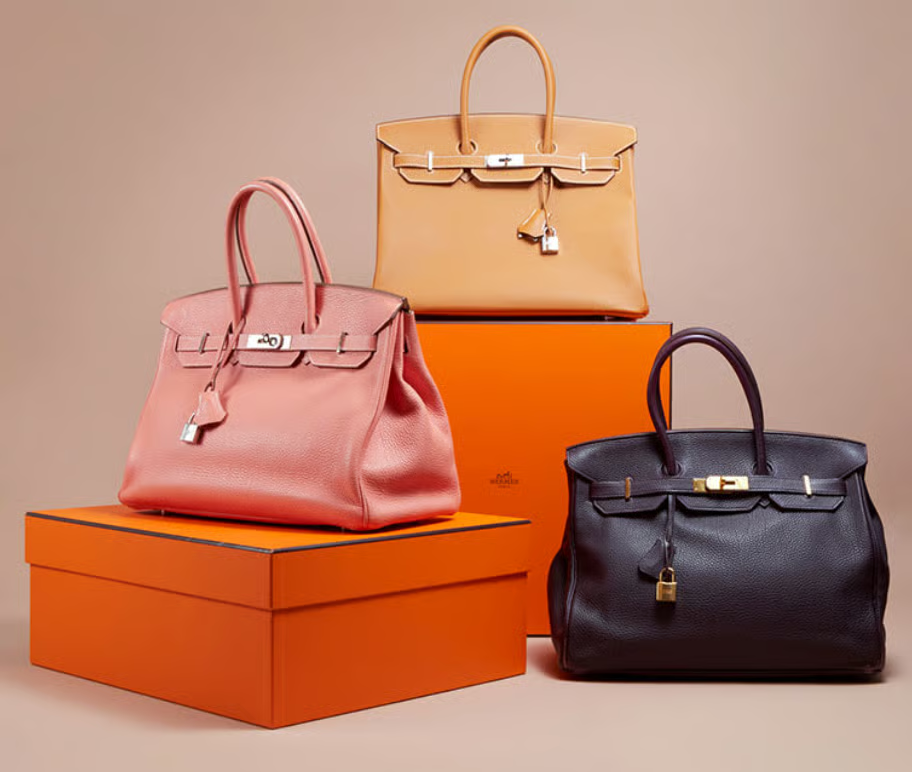
Normally, you want your product to be everywhere. But as we all know, luxury often breaks many “normal” business rules. Luxury is scarcity, exclusivity, and that little dopamine hit of feeling special. If you’re carrying a Birkin, Hermès’ most iconic and exclusive bag, it loses a lot of its mystique if you bump into a dozen other people with the exact same one on your way to get coffee.
That’s also why counterfeits are such a risk for luxury brands. In small doses, they can even feed the aspirational image – people see the logo everywhere and start wanting the real thing. But once there are too many fakes, the dynamic changes. At first glance, it’s hard to tell whether it’s real or fake, and constant exposure to the print can make the brand feel “cheap” to the very customer base that’s supposed to value it most.
When I see someone wearing a Gucci cap or bag, my default assumption is that it is fake. You don’t ever want that to happen as a brand.
The Gaiting Mechanism
If you listened to our Hermès episode, you’ll have heard Shawn and me spend a good 15 minutes, maybe longer, talking about the so-called “Gating Mechanism.” It’s a pretty common practice among the most exclusive luxury brands in the world, regardless of the category. Ferrari, Patek Philippe, Hermès… they all do it.
In practice, it means they won’t sell you their most in-demand products even if you have the money. Those pieces are reserved for loyal customers with a long track record. You could be a Hollywood actor, and yet, if you’re not a regular Hermès client, you still won’t get the chance to buy a Birkin.
So when you see someone carrying a Birkin, you can be pretty sure they didn’t just pay the ~$30,000 sticker price. They’ve likely spent multiples of that on other Hermès products just to earn the right to buy one.
It’s a relationship-based system that works a bit like a leveling system. When you first walk into an Hermès store, you’ll usually start with the “low-level” items – think scarves, watches, or perfume. Over time, by buying consistently, you build a relationship with your local boutique and the staff.
At some point, you might get offered your first bag. Not a Birkin or a Kelly, of course, but one of the less prestigious lines. This whole sales approach has come under some scrutiny by now. And that’s not exactly a surprise. It’s completely counterintuitive that you walk into a store, willing and financially able to buy the product, and the store basically goes, “Nope, you can’t buy that.”
There was a U.S. class action lawsuit against Hermès over this. The argument was that this “pay-to-play” system, in which you’re nudged to buy other Hermès products first to build a purchase history, with no guarantee you’ll ever be offered a bag, constitutes an illegal tying arrangement under antitrust law.
Hermès argued that handmade Birkin or Kelly bags are scarce and therefore that allocating them to loyal clients is a selective retail practice. Hermès has won the case, and as a complete layman in law with only a dozen law lectures at University, it does make sense to me that Hermès has full control over whom they sell to. The fact that something is displayed in a store, even if there’s a price tag, does not constitute an official offer to sell the item to anyone who shows up.
Before we go further into why gaiting is such an important mechanism for Hermès, let’s first discuss Hermès’s manufacturing process and see whether Birkin bags are actually so scarce that Hermès couldn’t offer more, even if they wanted to.
Manufacturing Excellence
Of course, that’s only part of the truth. Hermès could produce more bags if it wanted to. But that doesn’t take away from how demanding and genuinely high-quality the manufacturing process is.
Hermès follows the so-called “one man, one bag” policy, meaning each bag is made by a single artisan from start to finish. Shawn joked in our episode that Adam Smith wouldn’t be proud of that, and he’s probably right. But that’s exactly what makes Hermès special. Every bag is produced in France, and a single artisan manufactures and assembles it.
So each bag is essentially a 1-of-1, marked with specific stamps that identify the artisan and trace the leather’s origin. And by the way, when Hermès products say “Made in France,” they’re actually made in France. Not just the final stitch or “assembled in” part, but the whole thing.
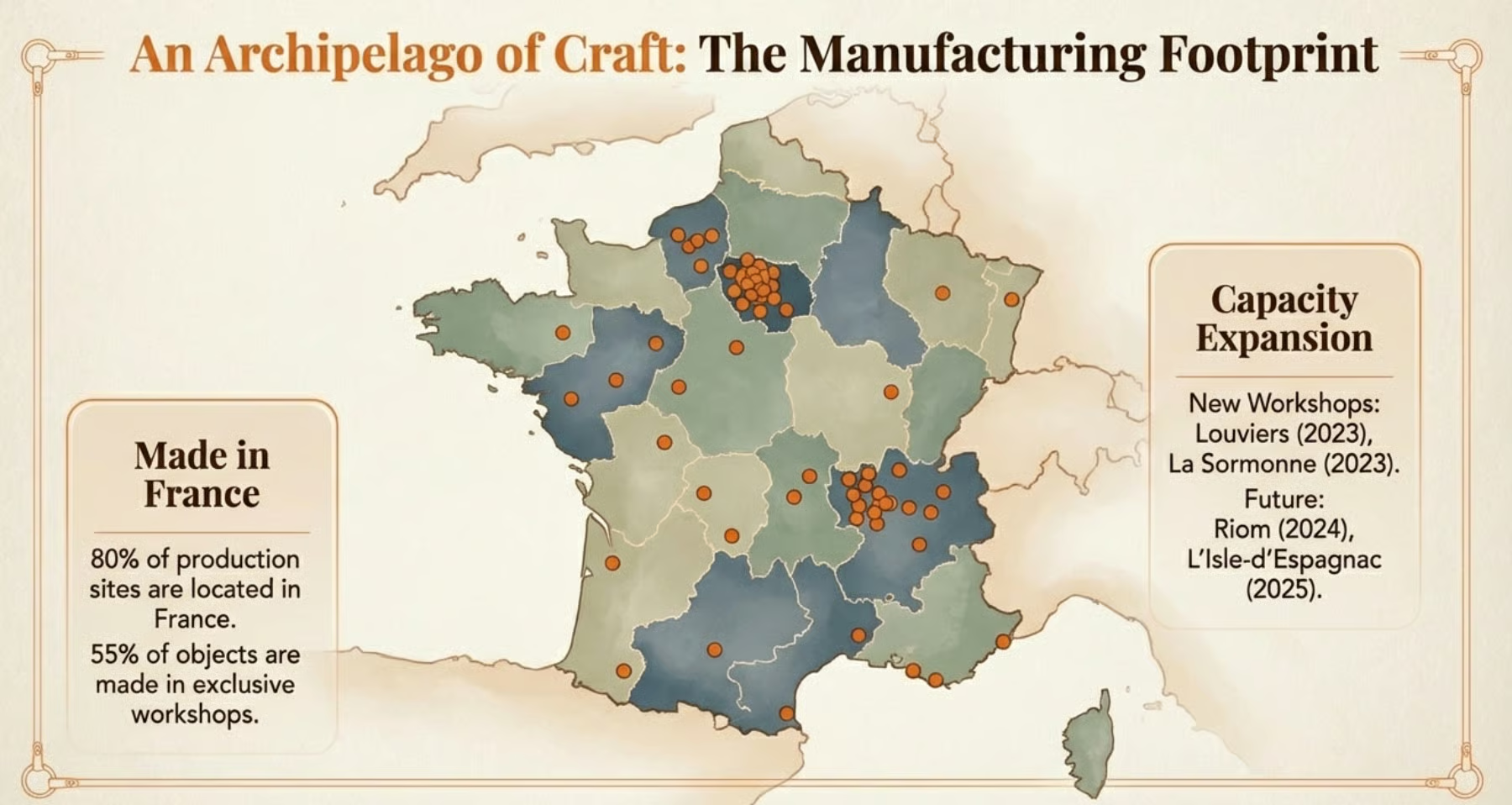
Today, that’s not a given anymore, even among luxury brands. It’s a real part of the Hermès brand image. Roughly 80% of products are manufactured in France. And the other 20% isn’t outsourced to low-cost Asian countries, but to places that are genuinely specialized in those categories. For example, watches are made in Switzerland, and some clothing comes from Italy.
Training to become an artisan takes about 18 months. But to become a Master of the craft, and yes, there’s an actual certificate for that title, you’re looking at roughly five years of study/work.
What I found even more astonishing is the so-called “apprentice tradition.” Hermès family members have to spend at least a decade in production before they can take an executive position. So this isn’t a little internship, so you can later say you “understand the company on all levels” in a Wall Street interview. They have to commit their lives to the craft in order to lead the company one day.
We’ve definitely not seen anything like that with Bernard Arnault’s kids at LVMH or really at any other company we’ve ever looked at.
By the way, Hermès is currently run by the sixth generation of the family. Although they no longer carry the Hermès name. At some point, there were only daughters with the Hermès name, and since, traditionally, the wife took the husband’s name, the Hermès name didn’t make it.

Business Breakdown and Store Economics
Up until the ’80s, almost all of Hermès’ revenue came from France, and roughly 50% of sales were driven by the Silk & Textiles segment – ties, scarves, shirts, that kind of stuff. Today, that picture has flipped completely, like with pretty much every modern global brand.
Roughly half of revenue now comes from the Asia-Pacific region, with China as the largest market. Around 20% comes from Europe, another ~20% from the Americas, and about 10% from Japan.
It’s not news to anyone, but I still find it kind of wild how critical Asia has become for fashion and luxury. It used to be Europe or the U.S., and now that era is long gone. If your brand doesn’t work in China, you’re in a tough spot.
The good news for Hermès is that it’s one of the most popular brands among the Asian elite, if not the most.
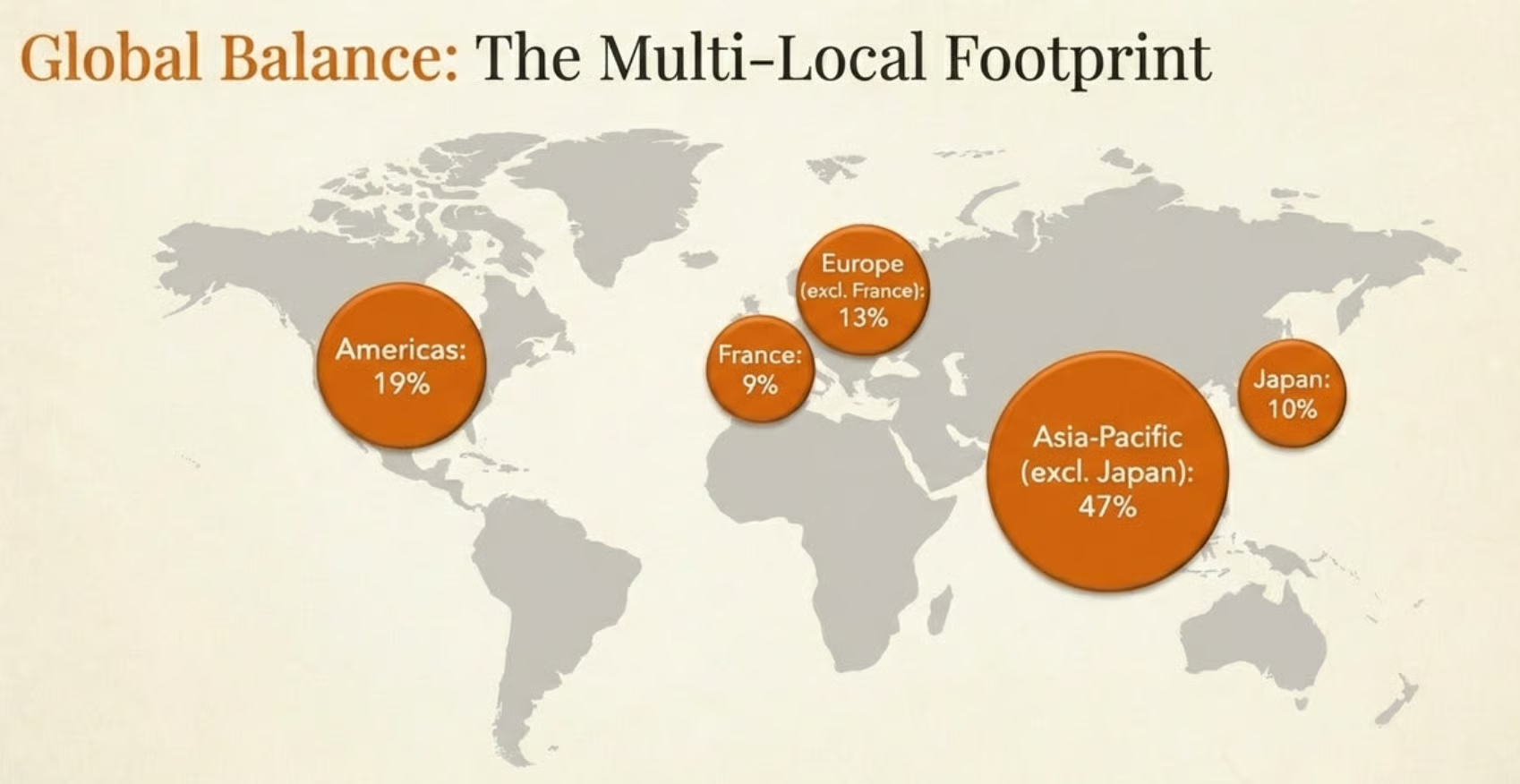
Asia isn’t just a volume story, either. It’s also the highest-margin region globally. While operating margins in Europe and the U.S. tend to sit somewhere in the low-to-high 30s, China is closer to 50%. The main reason is simply that demand from Chinese clients is huge. So every store you allocate to that region has a very high probability of selling through quickly.
Imagine that at any given time, you have 100 high-quality customers in Paris that you’d like to sell a Birkin to. You can’t allocate much more than ~100 bags without hurting the exclusivity.
Now take a store in China that’s roughly the same size and has roughly the same staffing. But instead of 100 top-tier clients, it might have ten times that number on the list. We don’t need to study math to see why that’s a more profitable store.
The more demand there is per store, the easier it is to be selective and still sell out.
I did some math using the (pretty limited) details Hermès reports, and I don’t think it’s unreasonable to assume Hermès generates about €60,000 to €80,000 per square meter on average. Which is an insane number.
Other fashion retailers like Lululemon sit around $16,000, while luxury fashion brands tend to be closer to $30,000 to $40,000. Apple is often crowned the king of store economics at roughly $50,000–$60,000, and it’s totally reasonable to think Hermès is in that same league, if not higher.
What has accelerated this metric is that Hermès’ share count has been shrinking for quite some time now. Since peaking in 2019, the store count has declined from 311 to 293. At the same time, revenue compounded at roughly 17% per year.
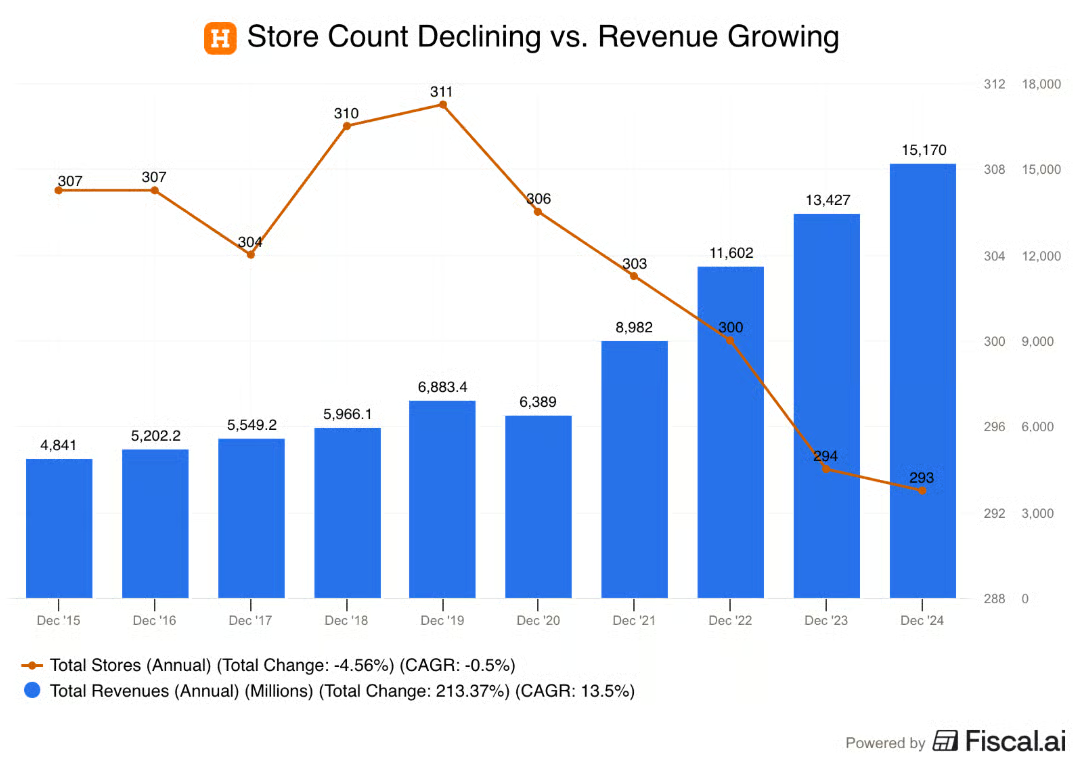
This is possible because of the sales dynamics I described above, and we’ve also seen it with Ferrari.
First of all, Hermès stores are basically never crowded. Employees have time, and big purchases are often initiated through personal outreach. So clients are contacted and invited. So “more stores” doesn’t automatically translate into more high-ticket sales the way it would for a normal retailer.
And because Hermès is the one doing the inviting, the most important locations are the flagship stores. You don’t need a bunch of boutiques in Tier 2 cities just so people can casually pop in while they’re out shopping. The customer will go to the city where Hermès is. Hermès doesn’t follow them.
Guy Spier once made a similar point about Ferrari. Most luxury car brands fight for the prime, easy-to-access spot in town. Ferrari doesn’t really care. They know the customer will come to them anyway. If there’s no real substitute for what you sell, you don’t have to chase customers.
Structural Tailwinds
The Chinese luxury market has been slow in recent quarters, affecting not only Hermès but the entire luxury sector. In fact, there are long-term tailwinds that could benefit Hermès.
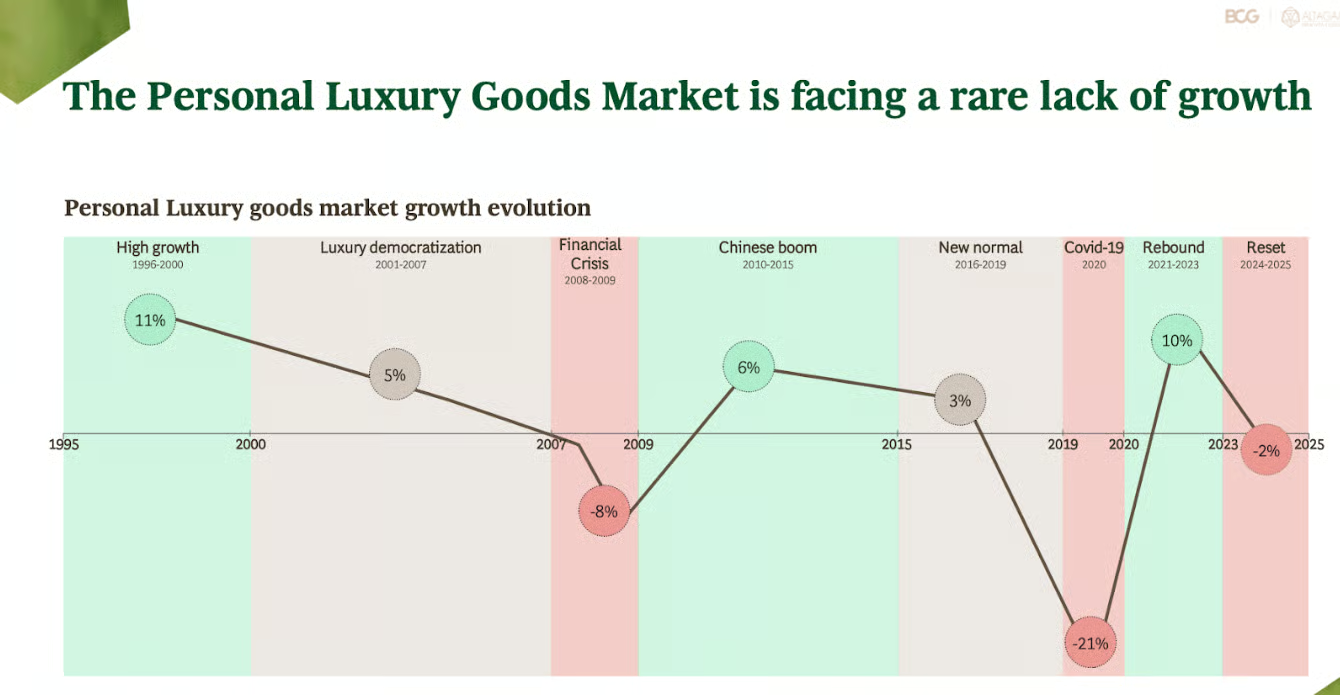
If we want to figure out whether Hermès can still be a great long-term investment, we need to know two things: First, what does the runway look like? And second, what are the risks that could actually kill the brand?
On the runway side, there’s not much to lose sleep over. Hermès has been at the forefront of ultra-high-end luxury for close to two centuries, and if anything, the client base is still expanding. The top 0.1% has been the fastest-growing cohort of luxury shoppers, compounding at around 9% per year over the last decade. For comparison, aspirational shoppers grew at a CAGR of only 1%.
I also don’t really see major headwinds from a generational shift. Studies suggest Gen Z is at least as interested in luxury as prior generations, if not more so. And when people say younger consumers prioritize travel over physical goods, it’s worth remembering who Hermès is actually selling to. If you can drop tens of thousands on a bag, odds are you’re not cancelling the next vacation to “make up for it.”
Another, somewhat unusual but really important, tailwind for Hermès is its family ownership. Luxury brands can fail for all sorts of reasons, but the most common is that they lose sight of the long term in pursuit of short-term performance. More often than not, that drift happens under the watch of outside CEOs.
As long as Hermès stays family-controlled and I fully expect that to be the case for a very(!) long time, I see that particular risk as relatively low.
Capital Allocation – Dividends and Hoarding Cash
When evaluating companies, we love to see a strong, healthy balance sheet. Hermès definitely checks that box. Cash is about twice the total liabilities, which mostly consist of short-term debt and leases, so no long-term debt.
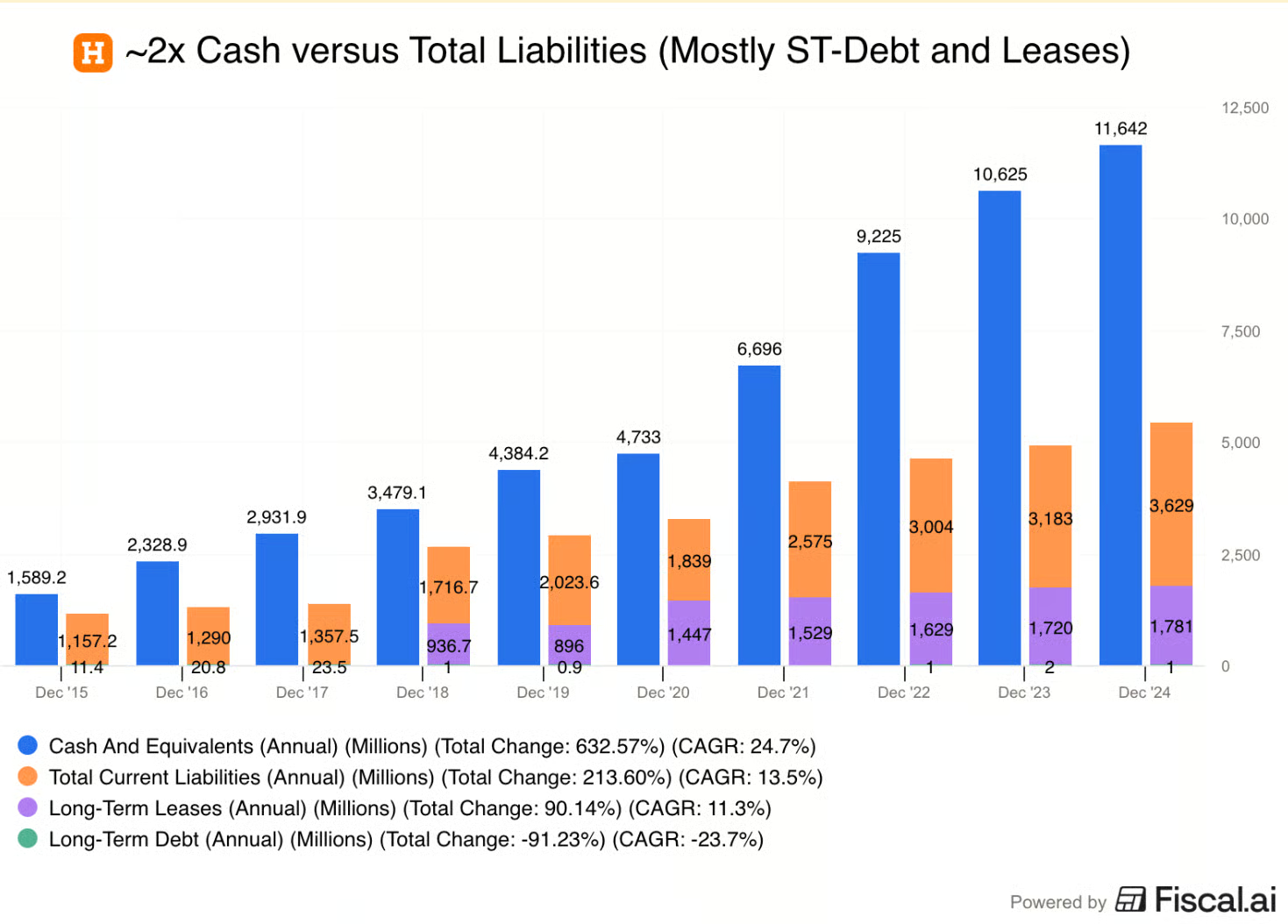
While that’s great to see, you could argue it also hints at something else. Hermès may not have endless opportunities to reinvest capital at high returns. Don’t get me wrong, the money it can reinvest earns phenomenal returns. We’re talking ROICs in the 40s. But there’s a ceiling on how much capital you can realistically plow back into the business.
That’s why cash compounded at roughly a 25% CAGR over the past decade. At today’s valuation, though, there isn’t an easy “fix” for that. Shawn and I talked about this in our Ferrari episode. When the multiple is high, spending cash on buybacks or dividends is simply less efficient.
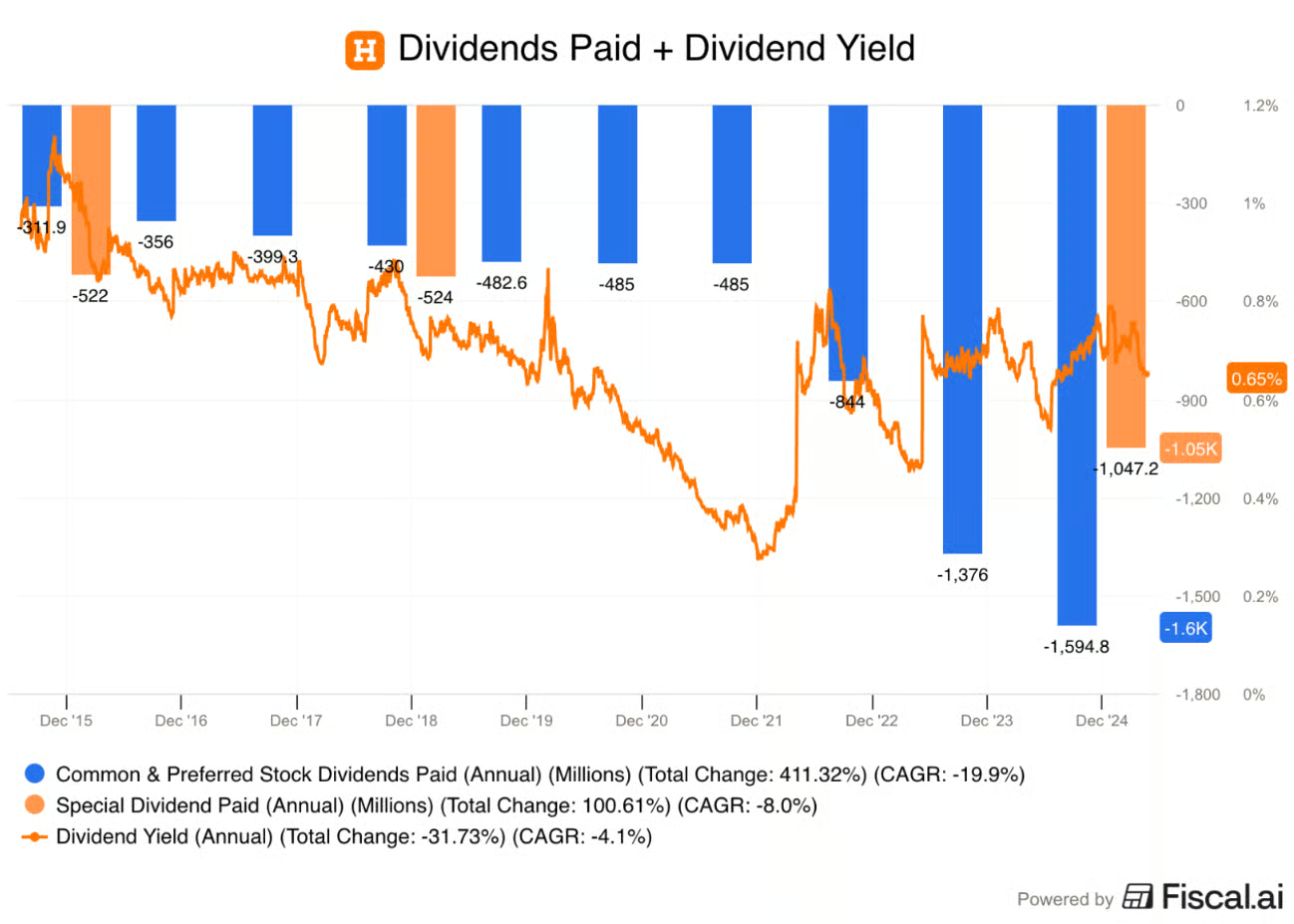
Last year, Hermès paid about €1.6 billion in regular dividends and another €1 billion in special dividends. And despite that, the dividend yield still came in below 1%.
Prefer to watch? Click here to watch this episode on YouTube.
HERMÈS’S VALUATION AND INVESTMENT DECISION
I could give you a song and a dance about different growth rates across product categories, but I think that would miss the real driver of Hermès’ stock price. At almost 50x earnings, the multiple is what’s going to decide your investment success from here on out.
Hermès is probably the most durable business I’ve ever come across. The brand and its image have existed for almost two centuries, and I don’t see that changing. In my mind, it’s even more durable than Ferrari. With Ferrari, you can at least get creative and paint a bearish picture around a structural decline in ICE car sales. Ferraris would still be in demand among the super-rich, sure—but it could still hit volumes over time, and that matters.
I don’t see a comparable structural risk with Hermès. The main risk is reputation. You could imagine some kind of scandal around sourcing—where the leather comes from, animal welfare, that sort of thing. But Hermès seems to manage this pretty proactively (for example, by controlling parts of the supply chain and working with dedicated farms), so I’m not losing sleep over it.
I also don’t really worry about Hermès suddenly being “out of fashion.” It doesn’t chase trends, which makes it unusually resilient in a world where fashion can flip overnight. And even if today’s icons like the Birkin or Kelly ever lost some of their appeal, Hermès can create the next product that benefits from the same brand prestige. Don’t forget that back in the ’80s, leather goods were only a small part of the business. Reinvention and innovation are part of the Hermès story.
With that backdrop, let’s get into the model. In my base case, I assume revenue grows at an 8% CAGR, a couple of percentage points below what we’ve seen in the last few years. I keep margins stable at current levels, which means operating profit and net income grow at roughly the same pace.

At an exit multiple of 40x and a 20% margin of safety, that leaves us with an estimated fair value of about €1,850, and only a mid-single-digit expected return.
In the bull case, I’m more optimistic about growth. Instead of a slowdown, you get more of a rebound in the Chinese luxury market over the next five years, which doesn’t just lift volumes, but also improves the mix and margins. In that scenario, I end up with roughly 14.5% growth in net income. Assuming the same multiple and the same margin of safety, this yields an estimated fair value of around €2,750.
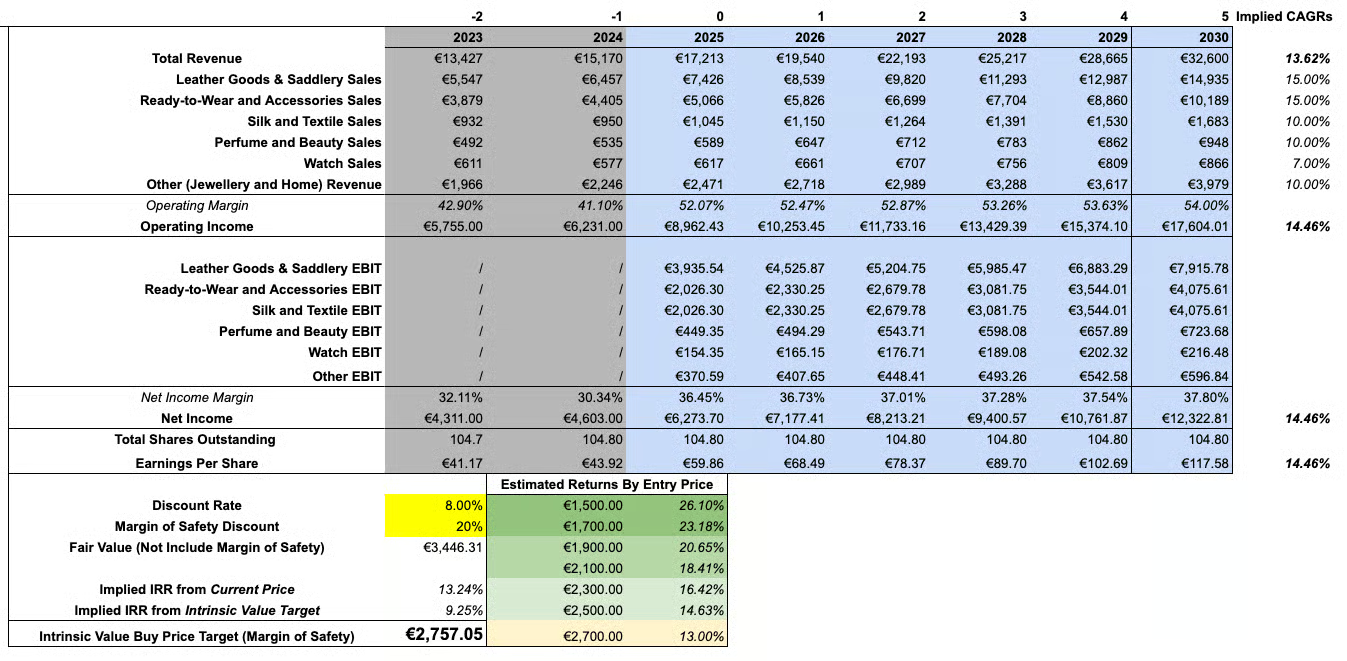
You might ask why I don’t increase the multiple in my bull case, and this is where investing in Hermès gets tricky for me. As a value investor, I’m simply not willing to expand a multiple that’s already 40x (in my model). If anything, and you’ll see this in the bear case, I compress it.
Hermès might trade at the current ~50x for a while. But to me, at that level, you’re mostly looking at downside risk. Even one of the best companies in the world will, at some point, see its multiple come down.
And when that happens, as you’ll see below, it doesn’t take much to end up with a stock that’s trading 50% lower than today.
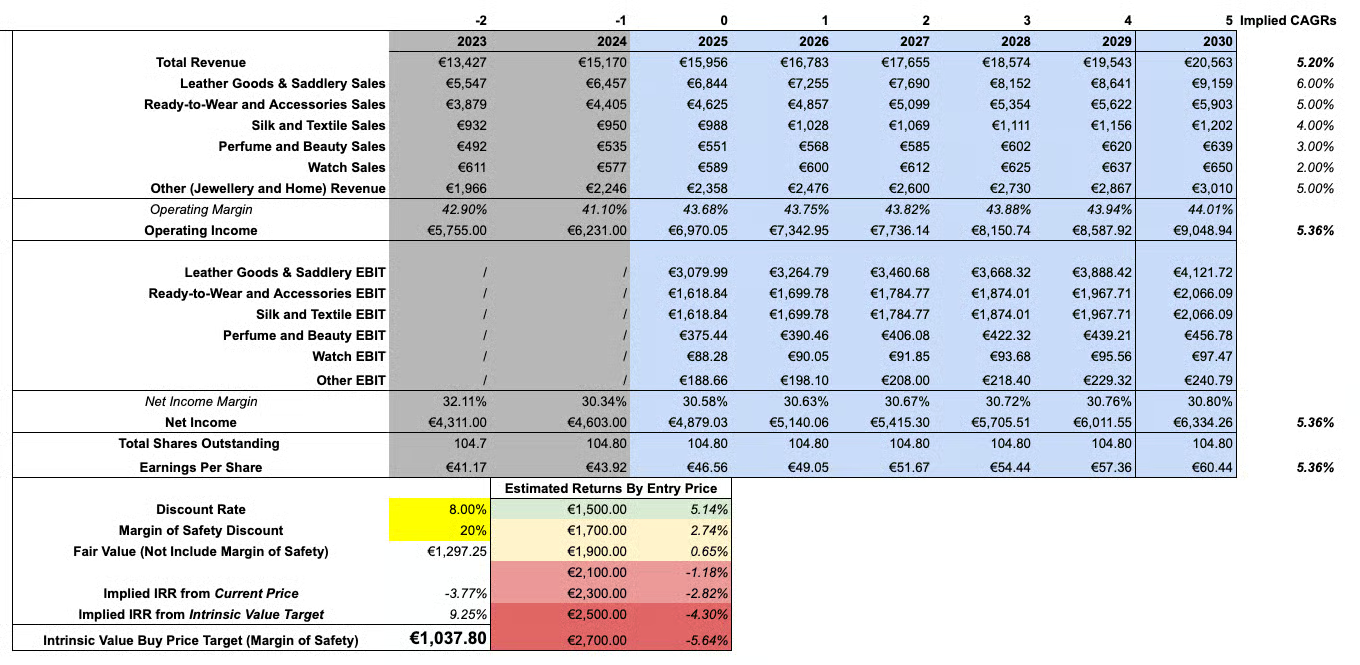
Hermès is a wonderful business, but we’re in a similar situation to Ferrari back when Shawn covered it on the show: at some point, the price is simply too high. And in my opinion, the stock is priced too well right now.
If we ever get a chance to buy Hermès at 30x earnings, I’m all for it. And if the past few weeks have shown us anything, it’s that even the best companies go on massive “sales” every now and then.
For more on Hermès, you can listen to our podcast here.
(Disclaimer: The Intrinsic Value Portfolio is a portfolio of high-quality, long-term stocks built out weekly by our hosts, Shawn O’Malley and Daniel Mahnke. To track the portfolio, sign up here.)
About The Author
Daniel Mahncke: Daniel Mahncke is one of the hosts of The Intrinsic Value Podcast where they break down and values different business every week.
Daniel Mahncke
Daniel Mahncke is one of the hosts of The Intrinsic Value Podcast where they break down and values different business every week.
OUR COURSES